
The Baroness Amos Maternity Review: What the Interim Report Found
An interim report into maternity and neonatal services in England has been published following an independent investigation led by Baroness Amos. The investigation has to date obtained the views of over 8,400 people, including families who have suffered harm and members of the public. The investigation has not yet concluded, but at this interim stage it has already identified significant failures.
The interim report illustrates a pattern of similar themes and issues across hospital Trusts, including failures to apologise when mistakes are made, the opinions and views of families being disregarded, and a general lack of kindness and compassion.
Six Key Factors Behind the Failures in NHS Maternity Services
Baroness Amos outlines six main factors within her interim report that have contributed to the failures she has identified:
- Capacity pressures.
- Culture and leadership.
- Racism and discrimination.
- Lack of accountability when things go wrong.
- The quality of estates and buildings where maternity care takes place.
- Workforce pressures, including insufficient staffing levels.
There are specific and staggering examples in the report, including failure to provide early senior clinical review, instances of alleged poor behaviour from senior clinicians, stereotyping of patients based on their background, chronic understaffing, and buildings described as “dilapidated.”
The Families Behind the Statistics
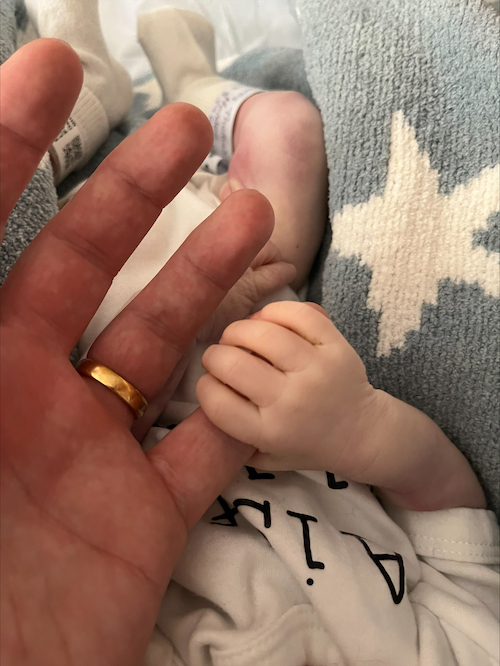
Many harmed families agree that there is a deep cultural problem within maternity services. Robyn and Jonathan Davis, whose son, Orlando, died at 14 days old after staff at Worthing Hospital failed to spot that Robyn had developed hyponatraemia, a lower-than-normal level of sodium in the bloodstream, during her labour, are among them. Laura Cook, Partner at CL Medilaw, represented the family at the inquest into Orlando’s death in 2024, where the coroner ruled that Orlando’s death had been contributed to by neglect. Robyn, a former midwife, believes that had she been listened to during her labour, her son may still be alive.
Concerns have also been raised about the Terms of Reference for Baroness Amos’s review, which limits consideration of care for babies of 37 weeks’ gestation onwards. Helen Hammond, Partner at CL Medilaw, acts for Ewa and Tom Hender, whose son Aubrey died at 36 weeks and 5 days’ gestation whilst under the care of what is now Sandwell and West Birmingham NHS Trust; two days before the threshold that determines whether a baby’s death receives proper independent consideration. The Henders are frustrated that this arbitrary gestational line is not being examined by the review.

A Pattern of Reports, Without a Pattern of Change
Baroness Amos’s review has also been criticised by some families for repeating the findings of previous reports into maternity care. These include the Morecambe Bay Investigation in 2015, the NHS England Better Births report in 2016, the Ockenden report into Shrewsbury and Telford Hospital NHS Trust in March 2022, the report into East Kent Hospitals University NHS Foundation Trust in October 2022, and the Birth Trauma Inquiry in 2024.
Baroness Amos’s view is that what distinguishes this review from those that came before is a commitment from the Secretary of State to establish a Maternity and Neonatal Taskforce to take recommendations forward and oversee their implementation. However, it has this week come to light that the taskforce has not yet been set up.
What Baroness Amos Says; and What Families Need
Speaking on BBC Breakfast on 26th February 2026, Baroness Amos acknowledged that families who have already experienced harm are entitled to expect accountability, and that her review may not be able to provide this. Her focus is on undertaking a systemic review, informed by individual experiences, to drive improvements in future care, rather than examining individual cases.
Many of those families continue to call for a judge-led statutory inquiry into how the system was allowed to deteriorate to this extent. Such an inquiry would also scrutinise the regulators, including the Care Quality Commission, under whose watch maternity care deteriorated, and who are currently excluded from the scope of Baroness Amos’s review.
Baroness Amos has stated: “I remain committed to driving the change which is so clearly needed in the maternity and neonatal system.” It is hoped that improvements will follow — but hope alone is not sufficient given the increasing pressures on maternity services and the deep-rooted nature of the problems identified. Real change must be implemented.
CL Medilaw’s Response: The Case for a Judge-Led Inquiry
At CL Medilaw, we see first-hand the devastating and lasting impact that failures in maternity services have on the families we represent. Every client we act for will feel the effects of the harm they and their babies experienced for the rest of their lives.
We stand in full support of our clients and their families. It is for this reason that we call for a judge-led inquiry into the care provided in maternity units in England. An open and thorough inquiry is essential to identify and enact the necessary changes. This is not about apportioning blame to individuals — there are unacceptable systemic issues that must be addressed if real change is to happen.
Laura Cook, Partner at CL Medilaw, comments:
“The Amos interim report confirms what these families already know about the failing maternity system. But what the review won’t answer is how things were allowed to get this bad. In any other industry or context, decision makers, management and regulators would be held to account for such disastrous failings that have caused avoidable harm, deaths and years of trauma for so many. Why should the NHS, a service funded by the tax-payer, be any different? We fully support all of our clients and families calling for a judge-led inquiry where witnesses can be summoned and evidence given as to how and why so many families have been failed.”
Background: The Amos Review in Context
The Baroness Amos review was announced in June 2025 following calls from harmed families and maternity campaigners, including those from the Maternity Safety Alliance. An initial interim update was published in December 2025, with the 14 NHS Trusts under review named in October 2025. The February 2026 interim report represents the most detailed findings to date.
For families who have experienced harm and are wondering whether the care they received fell below an acceptable standard, our birth injury team is here to help.
Quick Answers to Your Maternity Review Questions
Q: What is the Baroness Amos maternity review? The Baroness Amos review is an independent investigation into maternity and neonatal services in England, announced in June 2025 by Health Secretary Wes Streeting. It is examining the safety, quality, and culture of maternity care across the country, drawing on evidence from over 8,400 individuals and families. An interim report was published in February 2026.
Q: What did the Amos interim report find? The interim report identified significant and widespread failures across NHS maternity services, including lack of apology when mistakes occur, families’ views being dismissed, racial discrimination affecting care, chronic understaffing, and dilapidated facilities. Six key contributing factors were identified, ranging from capacity pressures to poor culture and leadership.
Q: Why are families calling for a statutory maternity inquiry? Many harmed families believe that a non-statutory review cannot compel witnesses or hold regulators (such as the Care Quality Commission) to account. A judge-led statutory inquiry would have broader powers and could examine not just what went wrong, but how the system was allowed to deteriorate over many years.
Q: What is the difference between the Amos review and a judge-led inquiry? The Amos review is a systemic review focused on identifying national recommendations to improve future care. It does not examine individual cases or hold specific organisations or individuals to account. A judge-led statutory inquiry, by contrast, can summon witnesses, examine evidence under oath, and scrutinise the actions of regulators and decision-makers.
Q: Can I make a legal claim if my family was affected by NHS maternity failures? Yes. If your baby or a family member was harmed due to negligent maternity or neonatal care, you may have grounds for a clinical negligence claim. CL Medilaw’s birth injury team offers free, confidential consultations and works on a No Win, No Fee basis. The limitation period is generally three years from the date of the negligence, or from the child’s 18th birthday, so it is worth seeking advice early.
Support for Families Affected by Maternity Negligence
If your baby or family has been harmed as a result of failings in maternity or neonatal care, you are not alone — and you do not have to navigate this without support. CL Medilaw’s specialist birth injury solicitors represent families across England on a No Win, No Fee basis. We can advise on whether clinical errors may have occurred, what your legal options are, and what compensation might cover — from specialist care and therapies to loss of earnings and long-term support.
Contact us today for a free, confidential conversation.
Related Posts
For over 30 years, CL Medilaw has been helping people who have been injured by a medical mistake or a serious accident. Many of [...]

MPs used the Baby Loss Awareness Week debate on 12th October 2026 to press for accountability, consistent bereavement support, and measurable improvements in maternity [...]
Shoulder dystocia during delivery is one of the most serious complications that affects mothers in labour. However, unlike many other birth injuries, it is [...]
Saturday 26th of September marked an important step forward in the independent review of maternity and neonatal care at Leeds Teaching Hospitals NHS Trust, [...]

County Durham and Darlington NHS Foundation Trust revealed last week that they were carrying out an internal review of their breast cancer services following [...]
The Thirlwall Inquiry has published its final report into events at the Countess of Chester Hospital, finding a “complete failure to protect babies” on [...]

Concerns about maternity and neonatal care at Leeds Teaching Hospitals NHS Trust have been building for several years, leading to the launch of an [...]
When a baby is deprived of oxygen during pregnancy, labour, or birth, families are often left searching for answers long after leaving the hospital. [...]