
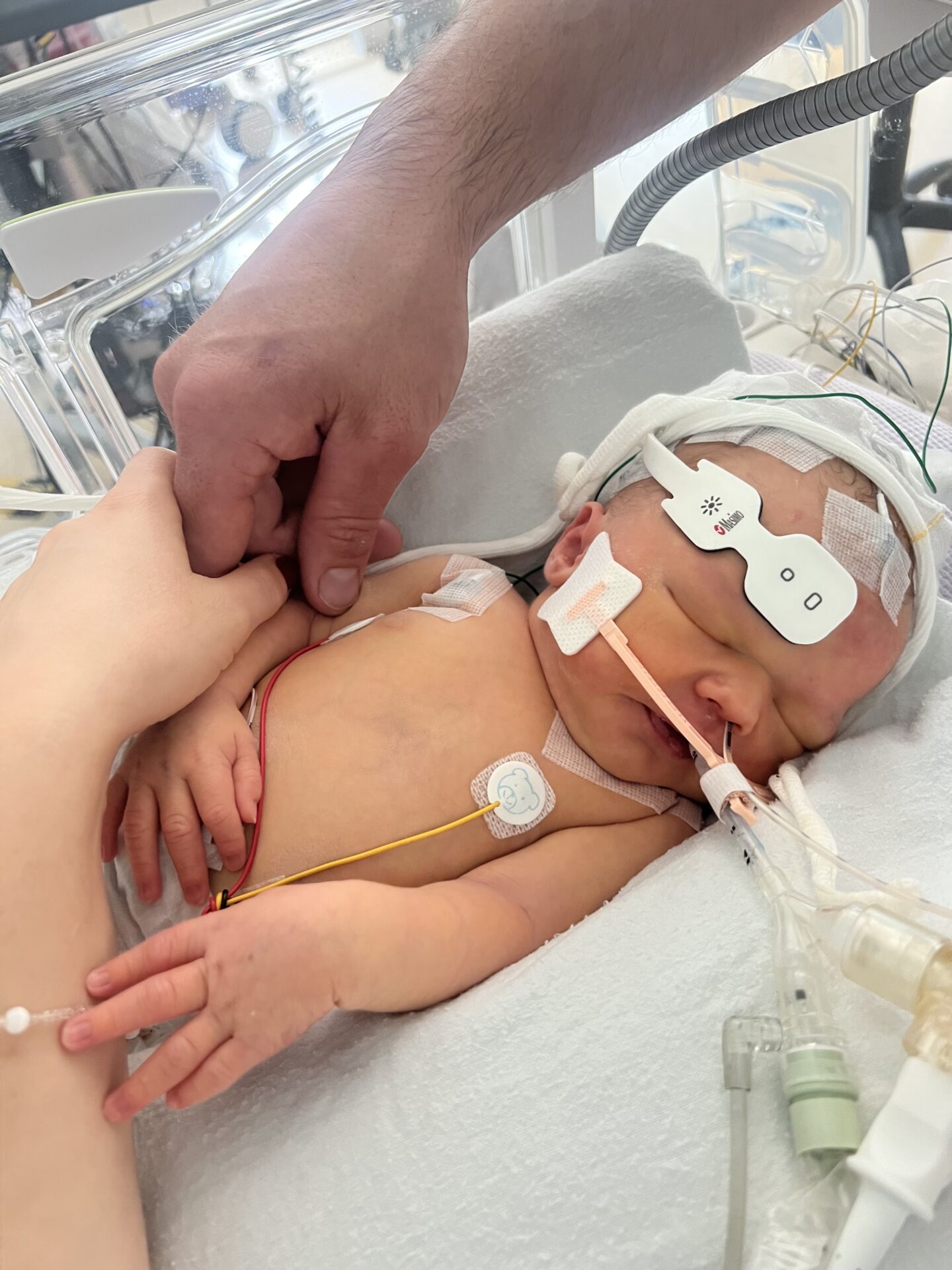
An inquest is being held this week into the death of seven-day-old Poppy Lomas, who died following a planned home birth in October 2022. The case raises serious questions about VBAC risks in NHS care, antenatal counselling, and decision-making around home birth pathways in the UK.
Background: VBAC and Pregnancy Planning
Poppy’s mother, Gemma, had previously delivered by caesarean section in 2018 and was keen to attempt a vaginal birth after caesarean (VBAC) in a birthing pool on the midwife-led birthing unit at The Princess Alexandra Hospital in Harlow.
The Trust’s guidelines provide that women seeking a VBAC should be referred to a VBAC clinic early in pregnancy, where the risks and benefits of a VBAC can be fully explained. Women requiring further counselling should also be offered a further appointment at around 28 weeks’ gestation.
Delayed Counselling and Lack of VBAC Discussion
Gemma was not referred to the VBAC clinic and did not receive counselling about her delivery options until 32 weeks’ gestation.
She was with her family in a restaurant when she received a telephone call from an obstetrician at the Trust informing her that she would have to give birth on the hospital labour ward. There was no discussion about Gemma’s wishes or the option of giving birth on the birthing unit. She was very distressed following the call and felt unsupported in making a decision about where and how she would have her baby.
Transfer of Care and Decision for VBAC Home Birth
On a friend’s recommendation, Gemma transferred her antenatal care to the Edgeware Midwives (managed by the Royal Free London NHS Foundation Trust). The midwives there listened to Gemma’s concerns, reassured her that many women went on to have a vaginal birth after caesarean, and that they could support her in trying to achieve the delivery she wanted. She trusted them immediately. The midwives suggested that Gemma could have a homebirth, which she agreed to as she understood it would probably involve less medical intervention and be a much calmer experience than a hospital setting.
The midwives assured Gemma that she would be in safe hands and that they would transfer her to hospital if there was any sign that the labour was not progressing as planned. They informed her that she would have a telephone call with an obstetric consultant at the Trust but that this was just a tick box exercise. They gave her no reason to believe she could not attempt a VBAC delivery at home. A personalised birth plan was written by the Trust setting out the ‘red flags’ which would require her to be transferred into hospital. Gemma had a hospital bag packed in readiness in case she needed to be transferred.

Labour and Failure to Escalate Care
When Gemma went into spontaneous labour at 38 weeks’ gestation, two midwives attended the homebirth. Gemma laboured in a birthing pool over the afternoon and evening. Despite abnormalities in the baby’s heart rate, Gemma’s complaint of sudden scar pain, and a prolonged second stage of labour, all of which were ‘red flags’, the midwives failed to arrange for her to be transferred into hospital.
Baby Poppy was born in the birthing pool at home in a poor condition; she had no heart rate, no respiratory effort, and was floppy. The midwives failed to immediately appreciate the baby’s condition and placed her on her mother’s chest encouraging Gemma to rub and talk to the baby. As panic set in, the midwives started CPR and Poppy’s father Jason called 999. An ambulance crew quickly arrived at the scene and continued attempts to resuscitate Poppy. The baby transferred to the Accident and Emergency department at Barnett Hospital where she was intubated, ventilated and stabilised before transfer to University College London Hospital for active cooling.
Brain Injury and Withdrawal of Life Support
In the days after her birth, Poppy had seizures. An MRI of her brain showed that she had suffered a catastrophic brain injury. Her parents were informed that she was unlikely to survive because she could not breathe on her own. Following discussion with Gemma and Jason, the decision was made to take Poppy off life support and she passed away with her family around her.
HSIB Investigation Findings
An investigation by the Healthcare Safety Investigation Branch (HSIB) identified that there were multiple occasions when clinicians at The Princess Alexandra Hospital NHS Trust either deferred VBAC counselling or gave limited information to Gemma, and that no individual doctor had oversight of her care to ensure she was given information in a timely manner.
During Poppy’s homebirth the personalised birth plan was not followed by the Edgeware Midwives and an ambulance was not called when there were obvious deviations from the norm.
CL Medilaw Comments
Gail Waller, birth injury solicitor acting for the family, said:
“This is a tragic case which could have been avoided had Gemma been adequately counselled about her options for delivery and been offered the chance to labour on the birthing unit. Furthermore, the midwives at the home birth failed to act upon the warning signs which ought to have prompted an immediate transfer into hospital. We hope that this week’s inquest will provide some answers to the family regarding the failings in maternity care at both NHS Trusts.
CL Medilaw have represented a number of families who were inadequately counselled on the risks of VBAC deliveries both in hospital and at home”.
You can read more about the families we have supported here: Coroner Issues Prevention of Future Deaths Report to Warn Mothers About VBAC NHS Risks.
Frequently Asked Questions: VBAC Risks in the NHS
Q: What are the main VBAC risks in NHS guidance? NHS guidance notes that VBAC is generally safe for many women, but risks can include uterine rupture, emergency caesarean section, and fetal distress. These risks are why structured counselling is recommended in early pregnancy.
Q: Is a VBAC home birth considered safe in the UK? A planned VBAC home birth may be offered in some cases, but it is generally considered higher risk than VBAC in a hospital setting due to the potential need for rapid emergency intervention.
Q: What should NHS VBAC counselling include?
Women should be given clear, balanced information about:
- Risks and benefits of VBAC vs repeat caesarean.
- Birth setting options (hospital, midwife-led unit, home birth where appropriate).
- Emergency transfer processes.
- Individual risk factors, including previous caesarean history.
Q: When should hospital transfer happen during a home VBAC?
Transfer is generally recommended if there are concerns such as:
- Abnormal fetal heart rate patterns.
- Signs of uterine scar pain or rupture.
- Prolonged labour or delay in progression.
- Any deviation from expected labour patterns requiring escalation.
Support for Families Affected by Birth Injuries
If your family has been affected by a difficult birth — including a VBAC delivery where something went wrong — the following organisations offer support alongside the legal process:
- Peeps HIE: Specialist support for families affected by hypoxic-ischaemic encephalopathy (HIE), the form of brain injury that results from oxygen deprivation at birth.
- Bliss: Practical and emotional support for families of babies who are sick or born too soon.
- Birth Trauma Association: Support for mothers and families experiencing trauma following a difficult birth.
- PALS: The Patient Advice and Liaison Service at your local NHS Trust can help you access medical records and raise formal concerns.
CL Medilaw is a panel member for both Peeps HIE and Bliss. Our birth injury team works alongside these charities every day to support families like Poppy’s. If you feel we may be able to help your family, please contact us on 0345 2410 154 or enquiries@clmedilaw.co.uk.
To arrange a free case review, just complete our contact form and we’ll get in touch to arrange a conversation.
Related Posts

For over 30 years, CL Medilaw has been helping people who have been injured by a medical mistake or a serious accident. Many of [...]

MPs used the Baby Loss Awareness Week debate on 12th October 2026 to press for accountability, consistent bereavement support, and measurable improvements in maternity [...]

Shoulder dystocia during delivery is one of the most serious complications that affects mothers in labour. However, unlike many other birth injuries, it is [...]
Saturday 26th of September marked an important step forward in the independent review of maternity and neonatal care at Leeds Teaching Hospitals NHS Trust, [...]

County Durham and Darlington NHS Foundation Trust revealed last week that they were carrying out an internal review of their breast cancer services following [...]
The Thirlwall Inquiry has published its final report into events at the Countess of Chester Hospital, finding a “complete failure to protect babies” on [...]

Concerns about maternity and neonatal care at Leeds Teaching Hospitals NHS Trust have been building for several years, leading to the launch of an [...]

When a baby is deprived of oxygen during pregnancy, labour, or birth, families are often left searching for answers long after leaving the hospital. [...]