
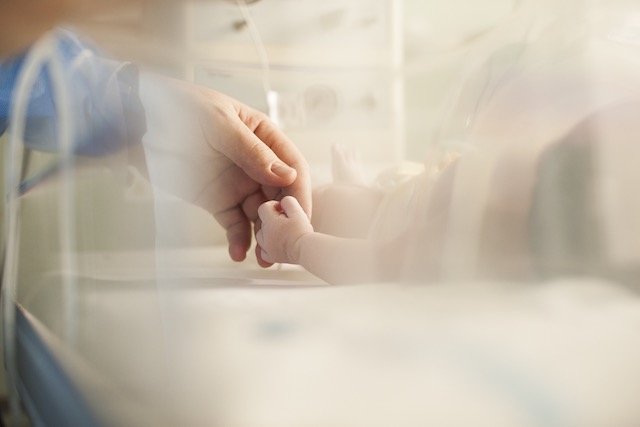
What causes premature birth? This is one of the first questions many parents ask, often alongside a harder one: did I do something wrong? In most cases, the answer to this is no, there’s nothing you could have done differently. According to the NHS, roughly 8 in every 100 babies are born before 37 weeks of pregnancy, and there is often no obvious cause.
Sometimes though, the care a mother or baby received while pregnant will have fallen short. When this happens, it sometimes comes to light afterwards that, with the right care, a baby might have been born later and avoided an injury.
This guide explains the causes of premature birth, what care should be offered at the time, and where affected families can find support.
What causes premature birth: why are some babies born early?
The causes of premature birth broadly fall into two groups: Some births happen spontaneously; others are planned by doctors when continuing the pregnancy becomes more of a risk than inducing early birth.
Labour can start early because of:
- Infection, including infection of the waters around the baby.
- The waters breaking too early, known as preterm pre-labour rupture of membranes (PPROM).
- A weak or short cervix (the neck of the womb).
- Carrying twins, triplets, quadruplets, etc..
- Problems with the placenta, such as placental abruption, where the placenta comes away from the wall of the womb.
- A previous premature birth.
A planned early birth may also be needed if the mother develops a condition such as pre-eclampsia, or if the baby is unwell.
Was it something I did?
Most causes of a premature term birth are completely outside a mother’s control. Although some health conditions and lifestyle factors can raise the chances of an early birth, simply having a risk factor does not mean a mother caused her baby to arrive early. Many babies are born prematurely to families with no risk factors at all.
Despite this, feelings of guilt are common after a premature birth for both parents. Bliss lists guilt among the feelings many parents experience, alongside worry and grief. Danielle, whose baby was born early, has written about the guilt she felt and why other mothers should not blame themselves.
Talking to someone who understands what you’ve been through can help. Bliss offers free emotional support to parents, and details are at the end of this guide.
What care should have been offered to you?
Knowing what good care should look like can help anxious parents understand how their own experience fell short. The points below come from NHS guidance.
Before labour, women at higher risk should be offered extra checks. This includes anyone who has:
- Given birth before 34 weeks in a previous pregnancy.
- Had a miscarriage at 16 weeks or later in a previous pregnancy.
- Had their waters break before 37 weeks in a previous pregnancy.
- Suffered an injury to the cervix, for example from a non-related surgery.
Women at higher risk are usually offered a scan between 16 and 24 weeks to measure the cervix. When the cervix is shorter than 25mm, this means the baby is more likely to be born early. Treatment may lower that risk. This could be progesterone, a hormone medicine placed in the vagina, or a stitch to support the cervix
When early labour starts, doctors may offer:
- Medicine to Slow Labour: This can delay the birth for long enough to give steroids or move the mother to a hospital with a neonatal unit. It is not suitable for everyone, including if there is an infection or bleeding.
- Steroid Injections: These help the baby’s lungs get ready to breathe.
- Magnesium Sulphate: Helps protect the baby’s brain and can lower the risk of cerebral palsy. It should be offered between 24 and 29 weeks but may sometimes be offered between 30 and 33 weeks.
If the waters break early, antibiotics and tests for infection should be offered. If a baby is likely to arrive early, the mother should be cared for in a hospital with a neonatal unit.
Care can differ from this guidance without anything going wrong. No two pregnancies are the same, and doctors sometimes have to make difficult decisions quickly. If your family’s care did not match this guidance, though, it may be worth asking questions.
How can premature birth affect a baby’s development?
Many infants born early grow up to be perfectly healthy. However, the earlier the birth, the more support they are likely to need. Some children go on to have problems with breathing, feeding, eyesight, or hearing. Others may have developmental delays that mean they reach milestones like sitting or walking later than others from their age group.
Brain injury is one of the most serious risks to premature babies. Periventricular leukomalacia (PVL) is damage to the brain’s white matter, which carries messages from the brain to the muscles. This kind of injury can happen when blood flow or oxygen to a premature baby’s brain is reduced, or as a result of infection. As this part of the brain is still fragile when a premature baby is born, they are most at risk.
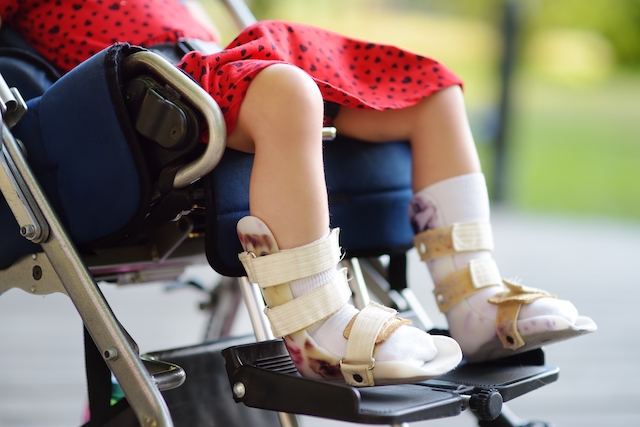
PVL can lead to further conditions, such as cerebral palsy, which affects movement, muscle tone, and posture. However, not every baby with PVL develops cerebral palsy, and much depends on the severity of the original injury. Our guide explains more about PVL and how it is diagnosed.
When could a premature birth (or its effects) have been avoided?
Most premature births do not involve mistakes in care. Sometimes, though, what causes premature birth is a problem that should have been spotted and treated, such as an infection or a short cervix. The baby may then be born earlier than they needed to be.
Care can also fall short once labour has started. A baby who was always going to arrive early may then suffer harm that better care could have prevented.
This can happen when:
- Risk factors are not spotted, meaning no scan or treatment is offered as a result.
- Signs of labour or infection are missed.
- Steroids or magnesium sulphate are not offered when guidance says they should be.
- A mother is not moved to a hospital with the right neonatal unit.
- There are delays or poor decisions about how and when to deliver the baby.
- Mistakes are made in the baby’s care after birth.
Mary’s story shows how this can happen. Her mother, Rosie, was 28 weeks pregnant when heavy bleeding and contractions began. Her eventual claim was not about the early labour itself. It was about how the labour was managed.
Rosie was not offered a caesarean section when she arrived at hospital, and a plan for an emergency caesarean was later reversed. When monitoring showed Mary was in distress, the response was then delayed. Finally, her consultant left the operating theatre and handed over to a less experienced doctor.
Mary was born with a PVL brain injury and now lives with severe cerebral palsy. Although another firm had dropped her claim, we listened to her parents’ concerns, reopened the case, and obtained fresh expert evidence.
The hospital Trust eventually admitted liability. Mary’s compensation now pays for her care, therapy, equipment, and a home adapted to her needs. Today, she is a bright, joyful girl who loves shopping for shoes and playing basketball with her big brother.
In England, families with questions about their care can contact the hospital’s Patient Advice and Liaison Service (PALS). If something may have gone wrong, our birth injury solicitors can review the medical records and explain whether the care met the expected standard.
What support is available for parents of premature babies?
Neonatal care leave and pay
The Neonatal Care (Leave and Pay) Act 2023 came into force on 6th April 2025. It gives working parents in England, Scotland and Wales extra time with their baby.
Parents can take extra leave if their baby starts neonatal care within 28 days of birth and stays for 7 full days or more. They get one week of leave for every full week in neonatal care, for up to 12 weeks. This is on top of maternity, paternity, and shared parental leave. It must be taken within 68 weeks of the birth.
It’s important to understand that leave is a right from the first day in a job. Many parents can also get Statutory Neonatal Care Pay, depending on their length of service and earnings. From April 2026, this is £194.32 a week, or 90% of average weekly earnings, whichever is lower.
Twins and triplets are often born early. If more than one baby is in neonatal care at the same time, parents can claim for one baby only, for up to 12 weeks in total. Read how we supported one family after the birth of their triplets.
Full details are on GOV.UK and in our guide to the Neonatal Care Act.
Bliss
Bliss is the UK charity for babies born premature or sick. It offers free emotional and practical support to families by email, by video call, and through an online parent group. This includes bereavement support for families whose baby has died. CL Medilaw is proud to be part of the Bliss legal panel.
Other support
The Birth Trauma Association supports parents who have experienced a difficult or traumatic birth. Any families whose child has long-term needs may also be able to claim Disability Living Allowance. Finally, parents who are struggling emotionally can also speak to their GP or health visitor, who can refer them to specialist NHS support.
Frequently asked questions
Q: When is a baby considered premature? A baby is considered premature if born before 37 weeks of pregnancy. Within that, there are three categories based on how early the baby arrives: extremely premature (before 28 weeks), very premature (28 to 31 weeks), and moderate to late premature (32 to 36 weeks).
Q: How early can a premature baby survive? The NHS says a baby can survive if born from around 24 weeks of pregnancy. Babies born this early need specialist care on a neonatal unit. Doctors should talk parents through their own baby’s situation.
Q: Can I claim compensation for a premature birth? Not for the early birth alone. A claim may be possible if the care fell below the expected standard and this caused harm to the baby or mother. Our solicitors can look at what happened and give an honest view.
Q: Is there a time limit for a birth injury claim? Usually, a claim must be made within three years. For a child, those three years start on their 18th birthday, so they have until they turn 21. If the child lacks mental capacity, there may be no time limit at all. A mother’s own claim usually has three years from the birth, or from when she first learned the care may have been at fault.
Talk to us when you are ready
A premature birth can leave questions that stay with a family for years. CL Medilaw’s specialist birth injury solicitors help families find out what happened and whether the care they received met the accepted medical standards. We are part of the Bliss legal panel, and we also give second opinions on claims other firms have turned down.
Most claims are funded on a no win, no fee basis, so cost need not stop anyone getting advice. If you have any concerns about the care you or your baby received, we are here to listen and provide any support you might need.
Contact us today for a free, confidential conversation about your experience.
Related Posts

Sodium valproate has been used to treat epilepsy, and less commonly bipolar disorder and migraines, since the 1970s. While concerns about its safety in [...]
Henrietta Hughes, England's Patient Safety Commissioner, has described the sodium valproate scandal as being “bigger than thalidomide”. It's a serious claim, given how deeply [...]

The Cumberlege report was meant to be a turning point for families affected by sodium valproate. Published in July 2020, it exposed decades of [...]
Foetal valproate syndrome is a condition that affects some babies when their mother takes sodium valproate during pregnancy. It can cause a number of [...]

Concerns around sodium valproate in pregnancy mean it has been effectively banned, with a small number of exceptions, since 2018. Despite this, the drug [...]

A spinal cord injury can affect your mobility, your independence and the shape of everyday life. Rehabilitation can help you to adapt, build new [...]
For over 30 years, CL Medilaw has been helping people who have been injured by a medical mistake or a serious accident. Many of [...]

MPs used the Baby Loss Awareness Week debate on 12th October 2026 to press for accountability, consistent bereavement support, and measurable improvements in maternity [...]