
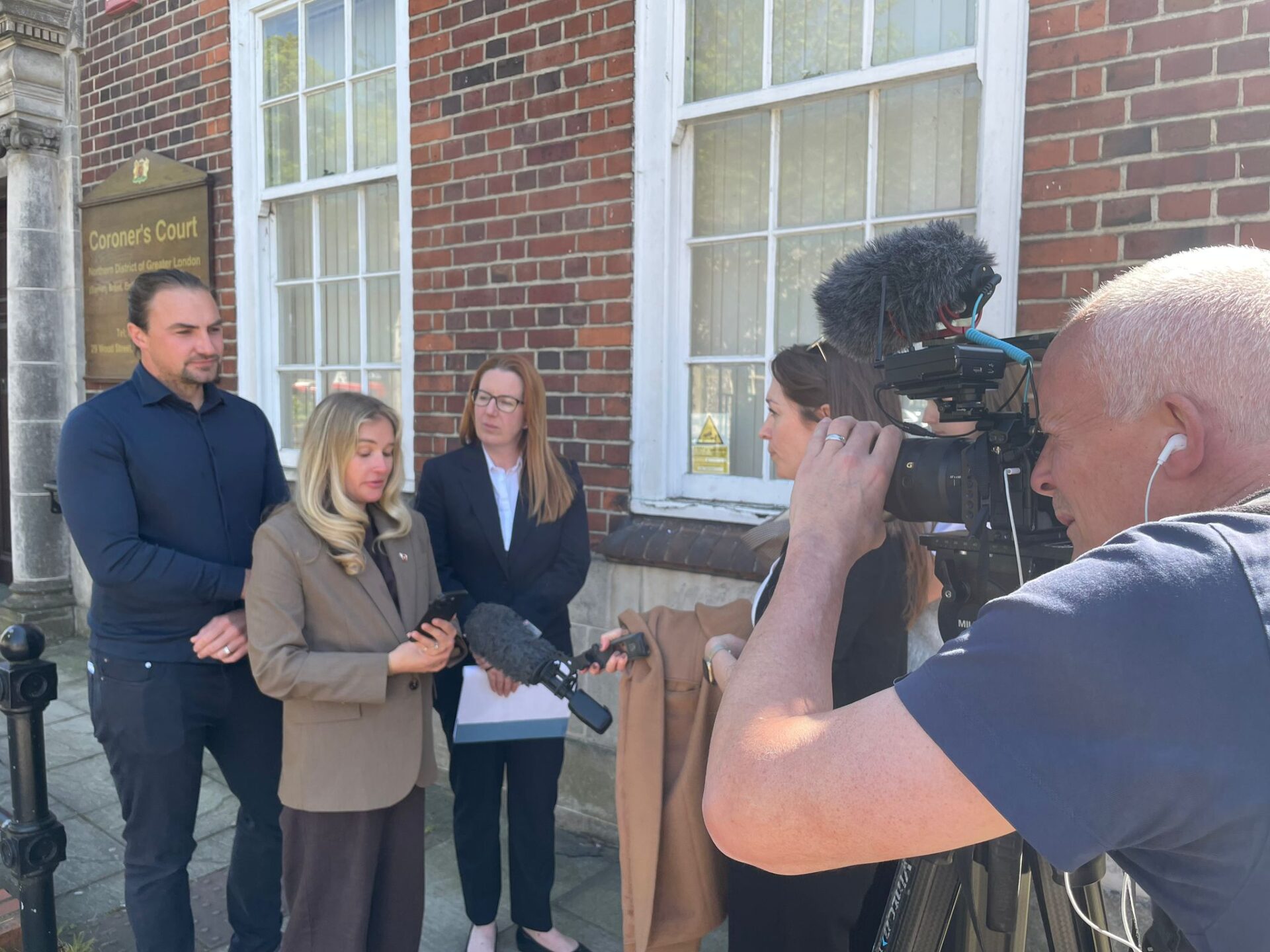
An inquest has concluded into the death of baby Poppy Lomas, who died aged 7 days in October 2022 following a planned home birth. The evidence heard raises serious concerns about both the information provided to Poppy’s mother, Gemma Lomas, and the clinical management of the labour itself.
The court heard that she was not properly informed of the risks associated with attempting a vaginal birth after Caesarean (VBAC) in a home setting, having already delivered her first daughter by Caesarean in 2018. Guidance from the Royal College of Obstetricians and Gynaecologists states that VBAC should take place in a suitably staffed and equipped unit where immediate access to emergency care is available. Mrs Lomas told the court that the Edgware Midwives, the designated homebirth team at Barnet Hospital, actively encouraged her to have a VBAC at home.
The inquest also identified critical failings during the labour. Evidence showed that signs of fetal distress, including decelerations in the baby’s heart rate, were not appropriately acted upon. A midwife involved in the birth accepted that an ambulance should have been called approximately 90 minutes before Poppy was born, as a report by the Healthcare Safety Investigation Board had found.

In his conclusion, HM Senior Coroner Andrew Walker described the failure to inform Mrs Lomas of those decelerations and to offer to transfer her to hospital, as “likely to be a really serious failure to provide basic medical care.”


Beyond the individual failings, the Coroner highlighted systemic concerns. He questioned the use of the term “out of guidance” in maternity care, noting that it fails to reflect situations where patients are not adequately supported to understand and weigh the risks of declining recommended medical care.
The coroner issued four recommendations to the Department of Health and Social Care, including clearer written consent, and multi-disciplinary meetings involving consultant obstetricians, hospital and home birth midwives, and the patient where risks and benefits can be clearly explained. The coroner noted that home birth kits may lack essential equipment such as a pulse oximeter.
Gail Waller birth injury solicitor acting for the family said:

“This case is a stark reminder that informed consent is not merely a formality, and that failures in communication and escalation can have devastating consequences. Accountability in maternity care depends not only on individual decision-making, but on systems that ensure risks are clearly explained, understood, and acted upon.
We welcome the Coroner’s recommendations to the Department of Health and hope that changes can be implemented nationally to prevent other families suffering similar tragedies in the future.”
You can read more about the families we have supported here: Coroner Issues Prevention of Future Deaths Report to Warn Mothers About VBAC NHS Risks
Contact us on enquiries@clmedilaw.co.uk or 0345 241 0154
Related Posts

For over 30 years, CL Medilaw has been helping people who have been injured by a medical mistake or a serious accident. Many of [...]

MPs used the Baby Loss Awareness Week debate on 12th October 2026 to press for accountability, consistent bereavement support, and measurable improvements in maternity [...]
Shoulder dystocia during delivery is one of the most serious complications that affects mothers in labour. However, unlike many other birth injuries, it is [...]
Saturday 26th of September marked an important step forward in the independent review of maternity and neonatal care at Leeds Teaching Hospitals NHS Trust, [...]

County Durham and Darlington NHS Foundation Trust revealed last week that they were carrying out an internal review of their breast cancer services following [...]
The Thirlwall Inquiry has published its final report into events at the Countess of Chester Hospital, finding a “complete failure to protect babies” on [...]

Concerns about maternity and neonatal care at Leeds Teaching Hospitals NHS Trust have been building for several years, leading to the launch of an [...]
When a baby is deprived of oxygen during pregnancy, labour, or birth, families are often left searching for answers long after leaving the hospital. [...]