
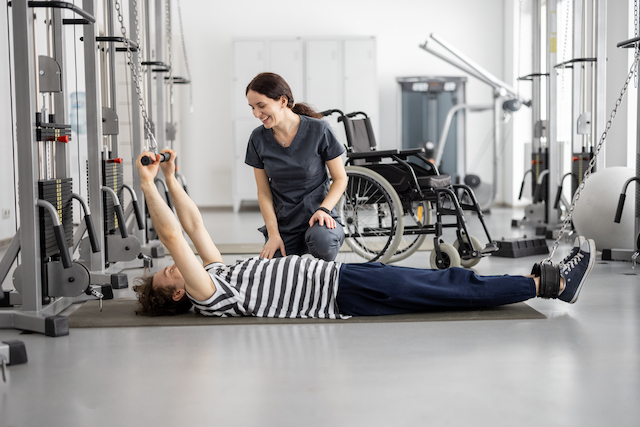
A spinal cord injury can affect your mobility, your independence and the shape of everyday life. Rehabilitation can help you to adapt, build new skills and get back to the things that matter most.
Our serious injury team recently settled a claim where early and ongoing rehab was central to our client’s progress. Their experience shows how much timing matters in spinal cord injury and rehabilitation, and how the right support can begin long before a claim has been settled.
How a spinal cord injury can affect you
Depending on where exactly the injury is located — and how severe it is — a spinal cord injury can affect movement, sensation, balance and coordination. It can also impact bladder and bowel function, while sometimes leading to persistent pain and fatigue. For some people, the injury leads to lasting restrictions on mobility and a lifelong need for care and specialist equipment.
Aside from the physical effects, the emotional impact can be just as profound. Adjusting to changes in independence, worklife, personal relationships and identity can take a long time. Because every injury is so different, rehabilitation should be shaped around you as an individual, by focusing on what you can manage and want to achieve.
You are far from alone in facing this. An estimated 4,400 people in the UK sustain a spinal cord injury every year, and over 100,000 people are currently living with one. Specialist NHS teams, charities and solicitors experienced in spinal cord injury and rehabilitation can help you through what comes next.
Why early rehabilitation makes a difference
Rehabilitation for a spinal injury can’t always restore lost function. That said, starting early can help you make the most of the function you have, learn new skills, and reduce the risk of avoidable complications.
Timing is important because complications can sometimes set your recovery back. Pressure sores and urinary tract infections are a particular risk, both in hospital and once you get back home. Early specialist rehabilitation helps you understand your injury better, helping you manage it better day to day.
Your team may include physiotherapists, occupational therapists, psychologists, specialist nurses, and spinal cord injury consultants. Together, they can help you build strength and mobility where possible and find safer ways of managing everyday tasks. They can also help you manage pain and fatigue, and adapt your home to support your independence.
There are 11 specialist spinal cord injury centres (SCICs) in the UK, where teams focus on helping people regain as much independence as possible. That said, not everyone is treated at one. If your care is taking place elsewhere, a specialist case manager and privately funded rehabilitation can help make sure you still get expert support.
Find out more about early rehabilitation.
Rehabilitation beyond the hospital
Spinal cord injury rehabilitation doesn’t stop when you leave hospital. NHS specialist teams describe it as a journey that takes years, and one best supported throughout life. Returning home can bring new challenges. Tasks that were once routine may need different techniques, specialist equipment or help from others. Your needs may also change with age, health and circumstances, so regular reviews are really valuable.
This is where a specialist case manager can help. They bring together everyone involved in your care, to spot any gaps in support and keep rehabilitation focused on your priorities. Those goals might be improving transfers, returning to work, taking up sport or travelling. Sometimes they might simply be managing everyday life with more confidence.
Progress is not always measured in dramatic physical changes. Often the most meaningful progress is regaining choice and control over your daily activities. A spinal cord injury may mean a lifelong process of adjustment, but independence, ambition, and an active life remain within reach.
Read more about life after a serious injury.
Getting rehabilitation while your claim continues
You do not have to wait for a claim to finish before getting the rehabilitation you need. Waiting might mean missing valuable chances to improve function, build independence and prevent avoidable complications.
What is the Rehabilitation Code?
The Rehabilitation Code provides a voluntary framework for solicitors and insurers to work collaboratively to put your recovery first. First introduced in 1999 and most recently updated in 2015, the Code encourages early access to rehabilitation, even where liability has not yet been agreed
In practice, your solicitor will work with you to identify your rehabilitation needs and discuss these with the insurer. For more serious injuries, this will involve a case manager or rehabilitation professional carrying out an Immediate Needs Assessment with you to recommend appropriate treatment and support. The aim is to agree funding and put rehabilitation in place as early as possible, with support reviewed and adapted as your recovery progresses.
The Code can work even while both sides are disagreeing about who was at fault. The assessment is kept separate from the legal arguments, so the focus stays on what matters — your recovery. If the claim later fails, the insurer will not ask you to repay rehabilitation it previously agreed to fund.
How the Code helped our client
In our recent case, the Rehabilitation Code meant our client could access specialist therapies, rehabilitation equipment, and case management without waiting for the claim to conclude. Over several years, a multidisciplinary team supported their progress and reviewed their changing needs. Meanwhile, medical and rehabilitation experts assessed the long-term consequences of the injury.
After extensive investigations and negotiations, the claim concluded with a substantial settlement. It was designed to give long-term financial security and fund ongoing spinal cord injury rehabilitation, care and equipment. It also plans for the possibility that needs will change over time.
“One of the most rewarding aspects of serious injury work is seeing the difference that the right rehabilitation and support can make to someone’s everyday life. This case involved years of hard work by our client and a dedicated team of rehabilitation professionals. Their commitment to making progress and maintaining independence has been central throughout. I’m pleased we have been able to bring the legal claim to a conclusion and hope the settlement provides reassurance and security for the future.”
Charlene King, Partner in the Serious Injury Team, who supported our client through the final stages of the claim.
Your questions about spinal cord injury and rehabilitation
How long do I have to make a spinal cord injury claim? Most claims have a time limit of three years, although exceptions apply, including for children, those lacking mental capacity and cases involving delayed knowledge. Whatever the circumstances, seeking specialist legal advice early can help secure rehabilitation and support when it can make the greatest difference to your recovery, so it’s always worth seeking advice about your individual circumstances.
Does the insurer have to fund rehabilitation? The Rehabilitation Code is voluntary, so an insurer is not obliged to agree to every recommendation. It should consider them and give reasons for any refusal. Where the two sides disagree, the Code recommends interim payments so your treatment can continue.
Get specialist support from CL Medilaw
Our serious injury team understands how closely spinal cord injury and rehabilitation are linked. That is why we prioritise your recovery in every spinal cord injury claim we handle, from the earliest weeks after an injury. We believe the legal process should support your recovery, independence and quality of life alongside pursuing financial compensation.
We are accredited by APIL and the Law Society, and work alongside charities including the Spinal Injuries Association. With more than 120 staff across 13 offices, you can access specialist support wherever you are. If you or someone close to you has a spinal cord injury, we can help you access rehabilitation early, even while a claim is ongoing.
Call us or complete our online form today to arrange a conversation at a time that works for you.
Related Posts

For over 30 years, CL Medilaw has been helping people who have been injured by a medical mistake or a serious accident. Many of [...]

MPs used the Baby Loss Awareness Week debate on 12th October 2026 to press for accountability, consistent bereavement support, and measurable improvements in maternity [...]

Shoulder dystocia during delivery is one of the most serious complications that affects mothers in labour. However, unlike many other birth injuries, it is [...]

Saturday 26th of September marked an important step forward in the independent review of maternity and neonatal care at Leeds Teaching Hospitals NHS Trust, [...]

County Durham and Darlington NHS Foundation Trust revealed last week that they were carrying out an internal review of their breast cancer services following [...]
The Thirlwall Inquiry has published its final report into events at the Countess of Chester Hospital, finding a “complete failure to protect babies” on [...]

Concerns about maternity and neonatal care at Leeds Teaching Hospitals NHS Trust have been building for several years, leading to the launch of an [...]

When a baby is deprived of oxygen during pregnancy, labour, or birth, families are often left searching for answers long after leaving the hospital. [...]